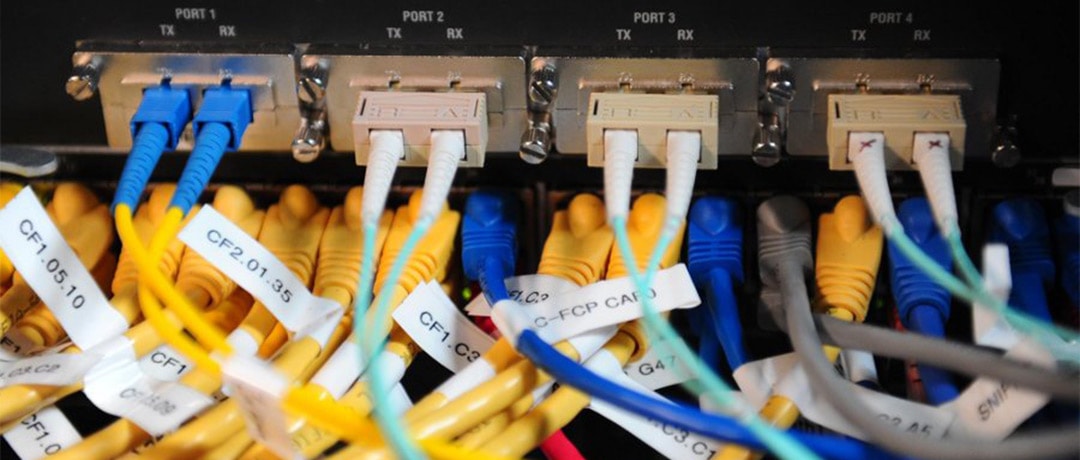
I am writing today to announce our latest data center network upgrades. We have recently upgraded our edge routers. We have used Cisco Catalyst 6509s and 6504s for several years. They were, at one time, the workhorses of the Internet, found in every Internet data center and commercial colocation facility. However, that time has passed. It’s expensive and quite a bit of work to replace them entirely. So, we’ve kept pace with the latest cards and supervisor engines. We have moved core network switching functionality off of them and left them in their edge routing role. We’ve done what we could to keep them going, but the time has come for their retirement.
The new hardware is simply awesome. It is as big to us now as the 6500s were to us when we first put them in to production 8 years ago. The new edge routers are Cisco ASR 9006s. These are great machines. It’s easy to see that these might be in production for at least 5+ years. The packets that moved this web page to you went through these new routers. Our data center location at the San Diego Tech Center, which also is home to our cloud Availability Zone “CA1” is running the new Cisco 9006 routers now. The Lightwave Data Center (home to Availability Zone “CA2”) will be upgraded later. Traffic and complexity at CA2 is less demanding than CA1, so it wasn’t as time-critical.
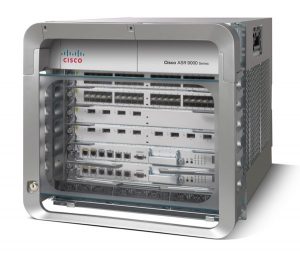 In addition to just upgrading the router hardware, we are making an architectural change to the network. Bear with me on this statement: The new routers are only routers, they don’t “switch”. So, we are breaking out the distribution layer to a set of layer 3 switches. Previously, we used the large chassis of the 6509s to do both edge routing and distribution switching. We used to have top of rack switches uplink directly to the 6500s. Now, we will have the top of rack switches uplink to a distribution fabric and internal layer 3 switches, which will then uplink to the new edge routers to get the to the Internet.
The reason is that we now have much more traffic between systems inside our data center. This includes larger dedicated server customers with multi-tier applications, and we also have traffic moving between our cloud and colo or cloud and dedicated server systems. This is known as “east-west traffic”. East-west traffic doesn’t need to go up to the edge routers, so it won’t.
In addition to upgrading the edge router hardware, we are upgrading our connectivity to our upstream network providers. Until a few years ago, we had 1Gbps connectivity to each of our providers. A few years ago we went to 10Gbps connections to all of our upstream providers. We are now in the process of upgrading to multiple 10Gbps connections to each of our providers.
All of this infrastructure is complex and expensive. We are geeks, so it’s a whole lot of fun to build it for you! In the end, your patronage of M5 Hosting drives the demand to build, and pays for the infrastructure. Thank you very much! By the way, the very same engineers that are building this network are the same engineers that respond if you need help, so you are getting help from people who really know the ins and outs. How can we help you?
Frequently Asked Questions
1. Why did M5 Hosting upgrade its network infrastructure?
M5 Hosting upgraded its data center network infrastructure to improve overall performance, increase bandwidth capacity, and support growing customer demand. The upgrade helps deliver faster connectivity, reduced latency, and a more reliable environment for businesses running websites, applications, and critical online services.
2. What new router technology is being used in the M5 Hosting network upgrade?
The network upgrade introduces advanced enterprise-grade router technology designed to handle higher traffic volumes and faster data transfer speeds. These modern routers support high-capacity connections and improved traffic management, helping M5 Hosting maintain stable and efficient network operations.
3. How does upgrading to multiple 10Gbps connections improve hosting performance?
Upgrading to multiple 10Gbps connections significantly increases the amount of data that can flow through the network at once. This higher bandwidth helps reduce congestion, improve page load times, and ensure smoother performance for high-traffic websites, cloud platforms, and enterprise applications.
4. How do network upgrades benefit cloud, colocation, and dedicated server customers?
Network upgrades provide faster data transfer, improved uptime, and more reliable connectivity. Customers using colocation, dedicated server hosting, or cloud infrastructure benefit from better application performance, quicker response times, and the ability to handle larger workloads without network bottlenecks.
5. How does M5 Hosting ensure high availability and reliability after the upgrade?
M5 Hosting ensures high availability by deploying redundant network paths, enterprise-grade hardware, and continuous monitoring systems. These measures help maintain consistent connectivity, minimize downtime, and ensure that customer infrastructure remains accessible and stable even during high network demand.