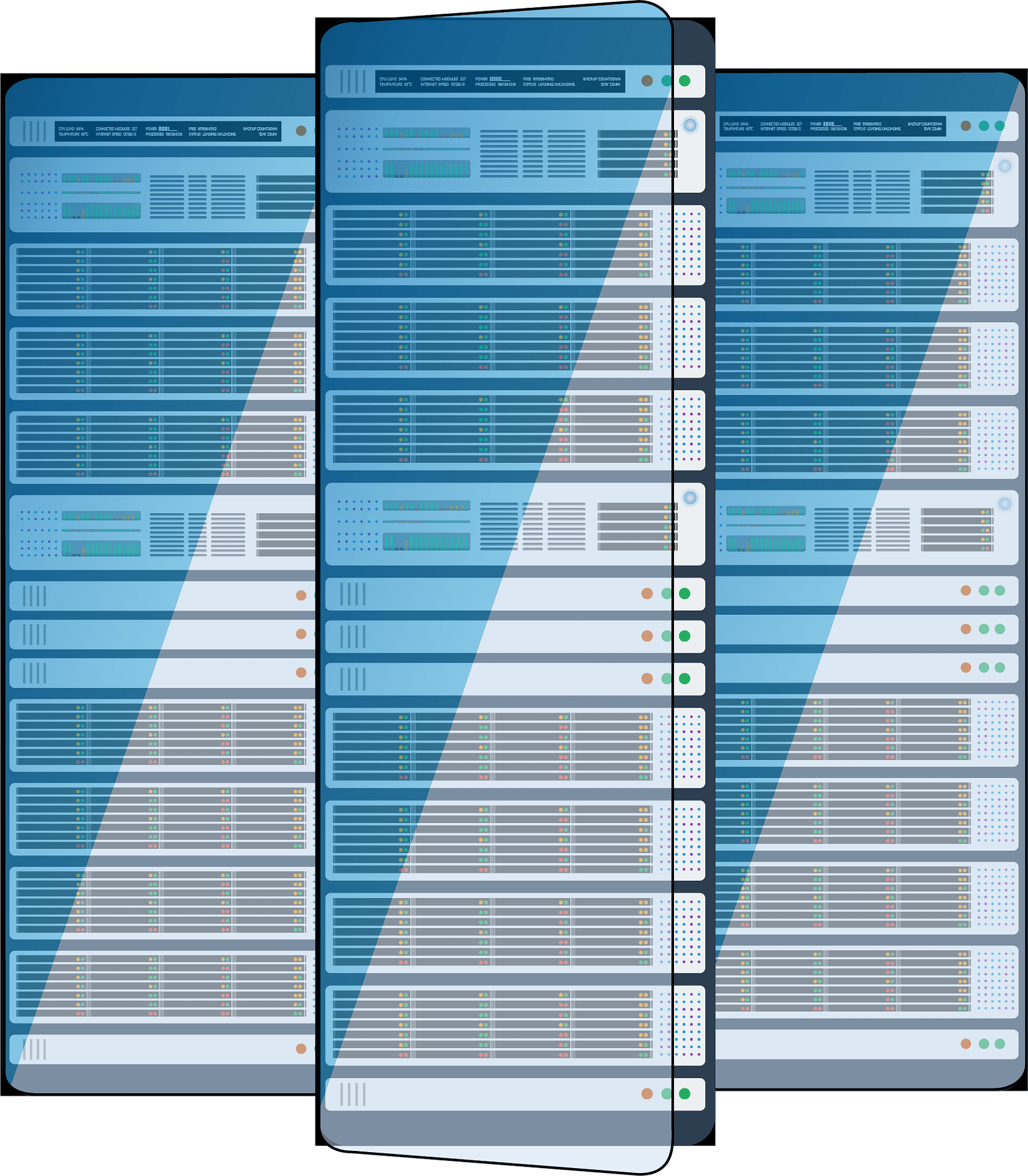
Dedicated servers are what people used to refer to as “those things in our stockroom with the fan blowing on them constantly…ask Bill, he’s knows what they do.”
Now, with the advent of the cloud environment, there are massive unmarked server farms that look like clandestine alien testing labs, which are actually high-tech, climate-controlled versions of a stockroom full of Bills.
As data and traffic is bandied about from one server farm to the next by larger cloud providers for redundancy and capacity reasons, some small and medium businesses have voiced concerns over inequity in cost and how they are deprioritized by server protocols.
However, after over a decade of the cloud, dedicated servers are still proving their worth. Some companies are discovering that:
- Data needs protecting and storing in a better environment, but you don’t need your own in-house resources to maintain or service the hardware.
- Depending on the business’ size, needs, and traffic, the cost can be lower than a cloud server solution but higher than shared hosting.
- Since dedicated servers could experience scheduled downtime, a blended cloud solution should be considered.
- High availability is linked to sales and productivity, but the difference between dedicated server vs. cloud server uptime is negligible.
- The dedicated server service is more personal and understandable. Plus, the team is generally smaller, likely consisting of only a couple of “Bills.”
Is there room for both cloud hosting and dedicated servers?
First, let’s talk about what a dedicated server is not. Shared hosting, for example, stores your site on a server with dozens (perhaps hundreds) of other sites, with whom you also share the traffic load. A cloud hosting plan is scalable, spreading data assets across several servers, which creates a nice fault tolerant environment for content producers who might have a sudden surge in traffic.
The difference between a cloud hosting plan and a dedicated server is that dedicated server plans include a fixed allocation of isolated RAM, CPU, & SSD/HDD storage. This improves security, boosts performance and is great for businesses with consistent traffic and a team in need of access to vital info (a CMS, an intranet, etc.). A cloud hosting plan may display some latency issues and allows data to skip from server to server, each of which has varying ages, reliability, and security issues.
Why should you want a dedicated server?
Cost, performance, and peace of mind.
A dedicated server complements a cloud service, providing a platform with options for control, data backup and mechanisms in case of a sudden surge in traffic. Moreover, it is a great way to manage costs, so expenditures track to your growth and storage needs.
A shared hosting environment can put your data at risk because of the online behaviors of another user you’ve never met. Even though your habits are good doesn’t mean that others on the server aren’t degrading the security with every click of the mouse. Servers have a finite lifespan and the performance of a dedicated server is reliable and predictable as long as it is well-secured and properly maintained by trained professionals like the people on the M5 team.
What does Dedicated Server Hosting look like?
The hallmark of the M5 Dedicated Servers are customized solutions and experienced attentive help when you need it. When your needs require it, we balance your cloud services with dedicated hardware systems.
Some possible requirements for dedicated cloud hosting may include:
- Advanced dedicated servers
- Advanced custom configurations
- High-speed local storage arrays
- Encrypted physical disks
- Eventual certified destruction required
- Non-variable I/O performance
- Software that requires a hardware key or “dongle”
- External hardware such as CDMA antennae, POTS lines or modem
- Legacy OS support
How Does a Dedicated Server Change My Current Experience?
Being a customized experience, the answer to that question is up to you.
The M5 team works closely with stakeholders to ensure the user experience between the dedicated server and the cloud server are seamless. A change like this offers the chance to rethink and reconfigure data taxonomy and file nomenclature to enhance workflows and improve search.
This also offers an opportunity to improve security. M5 offers a suite of security packages geared toward protecting the data housed on the server.
Conclusion
The highspeed line to your building is probably fast and secure, but likely not as equipped as M5’s facility for high traffic, data transfer capacity and environmentally controlled server hosting and security.
With a dedicated server and customized solutions, you can choose to keep things the same or customize them to your needs. This frees up your IT specialist for network concerns that can affect production rather than time-consuming hardware maintenance.
Contact M5 to host your dedicated server. We want to be your Bill.
Frequently Asked Questions
What is the difference between a dedicated server and cloud hosting?
The difference between a dedicated server and cloud hosting is resource allocation. A dedicated server provides fixed, isolated CPU, RAM, and storage on a single machine, while cloud hosting distributes resources across multiple servers for scalability and redundancy.
What is better: cloud hosting or a dedicated server?
A dedicated server plan includes a fixed allocation of isolated RAM, CPU, & SSD/HDD storage. For businesses with consistent traffic and a need to access vital info, this improves security and boosts performance. On the other hand, a cloud hosting plan could have latency issues and allow data to skip from server to server, each of which has varying reliability and security issues.
Is there still a place for dedicated servers in a cloud-based world?
Yes, dedicated servers still play an important role in a cloud-based world. They offer predictable performance, stronger isolation, and greater control, making them ideal for businesses with consistent workloads or strict security and compliance needs.
What are dedicated cloud servers?
Dedicated cloud servers combine the control and performance of a dedicated server with the flexibility of cloud infrastructure. This hybrid approach allows businesses to use dedicated hardware alongside cloud services for scalability, backup, and high availability.
Why do businesses use both dedicated and cloud server hosting together?
Businesses use cloud hosting and dedicated servers together to balance performance and flexibility. Dedicated servers handle stable, mission-critical workloads, while cloud resources support burst traffic, redundancy, and disaster recovery.
Who should consider cloud-based dedicated server hosting?
Organizations with steady traffic, sensitive data, or specialized hardware needs should consider dedicated and cloud server hosting. Providers like M5 Hosting help businesses design hybrid environments that blend dedicated infrastructure with cloud services seamlessly.